
Welcome to the DINS Seminar Series!
Please note that this page will be updated as more information becomes available, so check back often!
Next Event:
DINS Seminar
Friday, March 28, 2025
12:00 noon
Socially Responsible Computing Education in Information Science
Room 316, Third Floor Student Center, IS Building, 135 North Bellefield Avenue, Pittsburgh, PA, 15213
A panel of experts in computing and Information Science education will discuss the future of socially-responsible IS education.
Panelists:
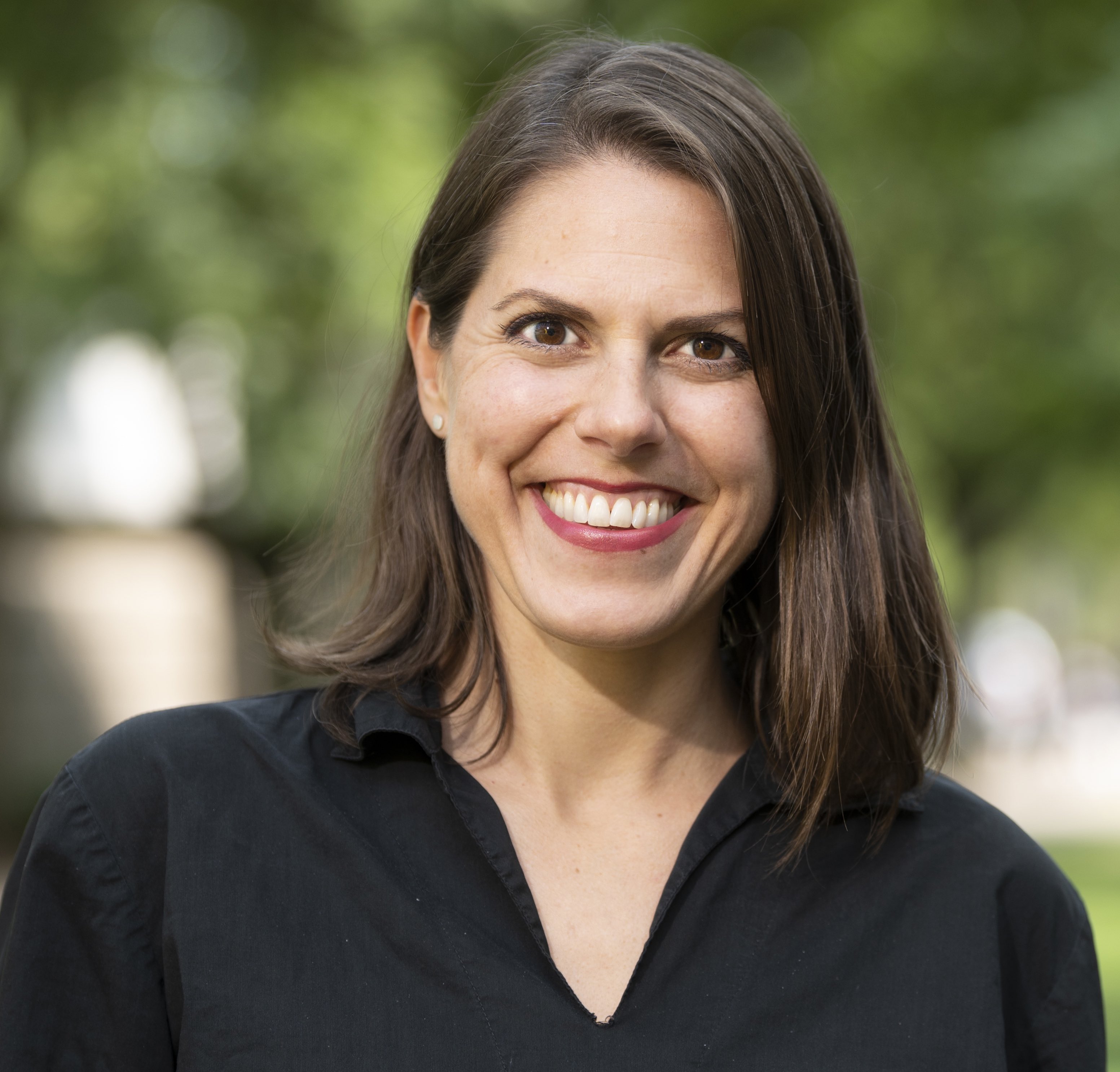 Annette Vee is Associate Professor of English at University of Pittsburgh, where she teaches undergraduate and graduate courses in writing, digital composition, materiality, and literacy and recently served six years as the Director of Composition. Dr. Vee participates in various AI initiatives at University of Pittsburgh and is the inaugural facilitator of the AI across the Disciplines program within Pitt’s School of Arts and Sciences. She is the author of Coding Literacy: How Computer Programming is Changing Writing (MIT Press, 2017), and co-editor of TextGenEd: Teaching with Text Generation Technologies (WAC Clearinghouse, 2023).
 Raquel Coelho is an Assistant Professor of Artificial Intelligence and Learning Sciences in the Department of Informatics and Networked Systems and Learning Research and Development System at the University of Pittsburgh. She holds a PhD in learning sciences and technology design combined with education data science from Stanford University. Her research focuses on applications and theorizing of emerging technologies (AI, NLP, quantum) in learning, within human-centered frameworks.
 Rosta Farzan is the Associate Dean for Engaged Scholarship and a Professor in the Department of Informatics and Networked Systems at at the University of Pittsburgh. Dr. Farzan teaches a graduate course on Social Computing, where students explore the intersection of computational technologies and social interactions, as well as the broader societal impact of these technologies. Her research focuses on community-engaged scholarship, partnering with marginalized communities to design, implement, and deploy inclusive technologies. Dr. Farzan was honored with the 2022 Chancellor’s Distinguished Public Service Award.
 Mohammed Alkhabbaz is a PhD student in Library and Information Science at the University of Pittsburgh's School of Computing and Information. His research interests bridge the theoretical and practical aspects of information systems, combining his technical expertise with critical perspectives on their societal impacts. He is particularly involved in research related to culturally responsive computing, artificial intelligence, and the broader ethical and societal implications of emerging technologies. His work reflects a commitment to understanding how information systems can be leveraged for positive social change while maintaining critical perspectives on technological development.
Previous Events:
Thursday, March 13, 2025
11:00 am to 12 noon
DINS+LERSAIS+PittCyber Seminar
Advanced Privacy-Preserving Federated Learning as a Service (APPFLx): Building Robust and Trustworthy AI Models
Ravi K. Madduri, Senior Computer Scientist
Data Science and Learning Division
Argonne National Laboratory
Third Floor Student Center, 135 North Bellefield Avenue, Pittsburgh, PA 15213
Refreshments will be served.
Abstract: Conducting secure privacy-preserving federated learning (PPFL) experiments that leverage large-scale, high-performance computational resources across distributed sites often demands technical capabilities beyond the reach of many organizations. To lower the barrier to entry for PPFL and empower domain experts in large institutions to utilize federated learning (FL), we developed Advanced Privacy-Preserving Federated Learning as a Service (APPFLx). APPFLx simplifies cross-silo PPFL through an intuitive web interface for managing, deploying, analyzing, and visualizing FL experiments.
The platform ensures secure federations using robust, end-to-end Identity and Access Management. Participants can establish or join federations using institutional credentials, perform privacy-preserving training on local datasets, and securely share model updates for aggregation. Additionally, we present the AI Data Readiness Inspector (AIDRIN) framework, designed to assess dataset readiness for AI applications, incorporating both traditional data quality metrics and AI-specific considerations. We discuss how integrating AIDRIN with APPFLx enhances data preparation and facilitates improved FL experiments, fostering trustworthy and effective AI model development.
 Bio: Ravi is a computer scientist working in the intersection of HPC/AI and biomedicine. His research interests are in building sustainable, scalable services for science, reproducible research, large-scale data management, analysis using HPC and AI. He leads the PALISADE-X project that is developing Privacy-preserving Federated Learning framework to build robust, trust-worthy AI models. He co-leads the MVP-CHAMPION project, which is a collaboration between VA and DOE and develops methods to perform large-scale genetic data analysis using DOE’s high performance computing capabilities, including methods for generating PRS scores in Prostate Cancer, genome-wide PheWAS on Summit supercomputer. Additionally, Ravi is one of three key contributors to the National Institutes of Health $100M Cancer Biomedical Informatics Grid (caBIG), which linked 60 NIH-funded cancer centers and clinical sites engaged in cancer research. For his efforts in project management, tool development, and collaboration, Ravi received several Outstanding Achievement Awards from NIH. For his work on “Cancer Moonshot” project, he received the Department of Energy Secretary award in 2017.
Friday, January 31, 2025
DINS+LERSAIS+PittCyber Seminar
Trustworthy Artificial Intelligence for Securing Transportation Systems
Dr. Bhavani Thuraisingham, The University of Texas at Dallas
12:00 pm to 1:00 pm
Third Floor Student Center, 135 North Bellefield Avenue, Pittsburgh, PA 15213
Refreshments will be served.
Abstract:
Artificial Intelligence (AI) techniques ae being applied to numerous applications from Healthcare to Cyber Security to Finance. For example, Machine Learning (ML) algorithms are being applied to solve security problems such as malware analysis and insider threat detection. However, there are many challenges in applying ML algorithms for various applications. For example, (i) the ML algorithms may violate the privacy of individuals. This is because we can gather massive amounts of data and apply ML algorithms on the data to extract highly sensitive information. (ii) ML algorithms may show bias and be unfair to various segments of the population. (iii) ML algorithms themselves may be attacked possibly resulting in catastrophic errors including in cyber physical systems such as transportation systems.
In this presentation, we discuss our research we are conducting as part of the USDOT National University Technology Center TraCR (Transportation Cybersecurity and Resiliency) led by Clemson University. In particular, we describe (i) the application of federated machine learning techniques for detecting attacks in transportation systems; (ii) publishing synthetic transportation data sets that preserves privacy, (iii) fairness algorithms for transportation systems, and (iv) examining how GenAI systems are being integrated with transportation systems to provide security. Finally we discuss resiliency issues with respect to transportation systems where such systems and applications must continue to operate in the midst of attacks and failures.
 Dr. Bhavani Thuraisingham is the Founders Chair Professor of Computer Science and the Founding Executive Director of the Cyber Security Research and Education Institute at the University of Texas at Dallas (UTD). She is an elected Fellow of the ACM, IEEE, the AAAS, and the NAI. Her research interests are integrating cyber security and artificial intelligence/data science including as they relate to the cloud, social media, and Transportation Systems. She has received several technical, education and leadership awards including the IEEE CS 1997 Edward J. McCluskey Technical Achievement Award, the IEEE CS 2023 Taylor L. Booth Education Award, ACM SIGSAC 2010 Outstanding Contributions Award, the IEEE Comsoc Communications and Information Security 2019 Technical Recognition Award, the IEEE CS Services Computing 2017 Research Innovation Award, the ACM CODASPY 2017 Lasting Research Award, and the ACM SACMAT 10 Year Test of Time Awards for 2018 and 2019 (for papers published in 2008 and 2009). Her 44+ year career includes industry (Honeywell), federal research laboratory (MITRE), US government (NSF) and US Academia. Her work has resulted in 140+ journal articles, 300+ conference papers, 200+ keynote and featured addresses, seven US patents, sixteen books, and over 120 panel presentations including at Fortune Media, Lloyds of London Insurance, Dell Technologies World, United Nations, and the White House Office of Science and Technology Policy. She has also written opinion columns for popular venues such as the New York Times, Inc. Magazine, Womensday.com and the Legal 500, She received her PhD from the University of Wales, Swansea, UK, and the prestigious earned higher doctorate (D. Eng) from the University of Bristol, UK. She also has a Certificate in Public Policy Analysis from the London School of Economics and Political Science. She has been featured in the book by the ACM in 2024 titled: “Rendering History: The Women of ACM-W” as one of the 30+ “Women that Changed the Face of World Wide Computing Forever.”
Friday, March 1, 2024
Profiling humans from their voice: A journey from the past to future generation technologies
Rita Singh, School of Computer Science, Carnegie Mellon University
12 noon to 1 pm
Conference Room (Fifth Floor) in 130 N. Bellefield Building, across the street from the IS Building
In this talk, we will explore the fascinating domain of human voice profiling, a field at the confluence of voice forensics and artificial intelligence (AI) that I have been developing since 2014. The human voice serves as a unique and dynamic biometric signature, rich in personal information and responsive to a variety of influencing factors. This presentation will chart the evolution of voice profiling techniques—from traditional signal processing to advanced AI-driven methods—highlighting the key methodologies used to delve deeper and deeper into the human persona through voice. These methodologies essentially emerge by connecting the dots between a wide range of areas—from physics and biomechanics to machine learning and AI, to cytogenetics and genomics. As we navigate through the complexities and mysteries of the human voice, as a biometric identifier and a medium to infer the speaker's state, we uncover its profound implications for future human-machine interactions. As the world progresses towards Artificial General Intelligence (AGI) —we also speak of its physical embodiments. We will discuss why the science of human profiling is expected to play a pivotal role in embodied AGI systems of the future.
Rita Singh is an Associate Research Professor at the CMU’s School of Computer Science/Language Technologies Institute, with affiliations to three other departments. At CMU, she leads the Center for Voice Intelligence and Security (CVIS: http:// cvis.cs.cmu.edu/), and co-leads the Machine Learning for Signal Processing and Robust Speech Processing research groups. She has worked on speech and audio processing for over two decades. Since 2014, her work has been focused on developing the science of profiling humans from their voice, a niche area at the intersection of Artificial Intelligence and Voice Forensics. The technology pioneered by her group has led to three world firsts: In 2018, her team created the world’s first voice-based profiling system, demonstrated live at the World Economic Forum. In 2019 her group also created the world’s first instance of human voice – that of the artist Rembrandt – generated based on evidence from facial images. In 2020, her team conceptualized and enabled the first voice-based detection system for Covid-19. She is the author of the book “Profiling Humans from their Voice,” published by Springer-Nature in 2019. She has assisted multiple international agencies in analyzing voice evidence for identifying and profiling potential suspects in crimes under investigation. Her contributions have been recognized in global media, with several hundred mentions in various national and regional newspapers, magazines, online articles, TV and radio programs, podcasts and private talks, including a few church sermons.
Friday, February 23, 2024
Formal Methods or Usable Security: Why Not Both?
McKenna McCall, Postdoctoral Researcher in the Software and Societal Systems Department, Carnegie Mellon University
11:00 am to 12 noon
Room 305 Information Science Building, 135 North Bellefield Avenue, Pittsburgh, PA 15213
Abstract: Formal methods research involves using mathematical techniques to specify and verify properties of software and hardware systems. In security and privacy research, formal methods can lead to strong, provable security guarantees—and typically leave questions about how humans might interact with these systems unanswered. Indeed, formal methods and usable security are traditionally distinct areas of research. In this talk, I will demonstrate how techniques from both research areas can be applied—or even combined—to create solutions that are simultaneously mathematically rigorous and usable. In one project, we revisit static analysis tools for home IoT users from a usable security lens and investigate the usability and utility of the workflow involved in using the tools. Later in the talk, I will describe a project with a formal methods focus where we propose a new technique for preventing undesirable information flows on the web. We argue that this approach is usable in more realistic scenarios than what is proposed by prior work—without sacrificing security.
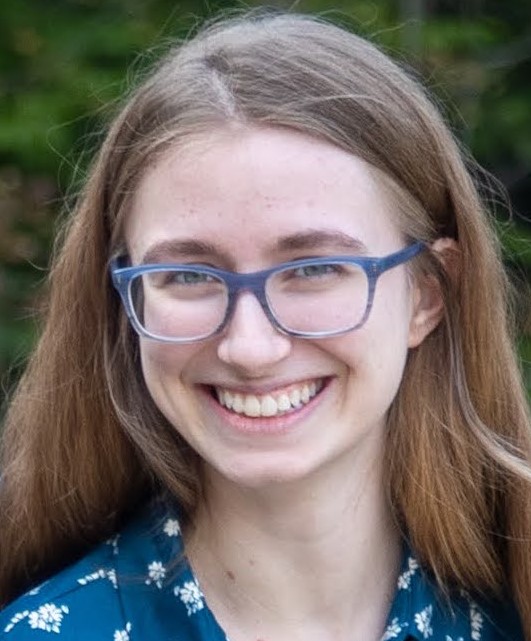 McKenna McCall is a postdoctoral researcher in the Software and Societal Systems Department at Carnegie Mellon University supervised by Lorrie Cranor and Lujo Bauer. She received her PhD from Carnegie Mellon University in 2023, advised by Limin Jia. McKenna’s research spans fields from information flow control and programming languages to security and privacy for home IoT and confidential computing. She is particularly interested in research where formal methods and usable security intersect, and combines techniques from both research areas to produce results that incorporate mathematical rigor as well as usability.
November 16, 2023
Pathways for Diversifying and Enhancing Science Advocacy
Fernando Tormos-Aponte, Assistant Professor, Department of Sociology, University of Pittsburgh
11:00 am to 12 noon
Conference Room, Fifth Floor, 130 North Bellefield Building (across the street from the IS Building)
Science is under attack and scientists are becoming more involved in efforts to defend it. The rise in science advocacy raises important questions regarding how science mobilization can both defend science and promote its use for the public good while also including the communities that benefit from science. This article begins with a discussion of the relevance of science advocacy. It then reviews research pointing to how scientists can sustain, diversify, and increase the political impact of their mobilization. Scientists, we argue, can build and maintain politically impactful coalitions by engaging with and addressing social group differences and diversity instead of suppressing them. The article concludes with a reflection on how the study of science-related mobilization would benefit from further research.
November 2, 2023
Personalization in the Age of Cyber-Physical-Social Systems
Bereket Yilma, Lecturer, Department of Computer Science, and Researcher, Computational Interaction (COIN) Group, University of Luxembourg
Nowadays, personalization has garnered significant traction in the context of smart environments collectively termed Cyber-Physical-Social System (CPSS). CPSS encompasses physical spaces such as smart cities, smart homes, schools, offices, museums, and factories where humans and sensor-enabled “intelligent devices” coexist. As these environments are continuously evolving in complexity, personalization presents both a promise and a challenge. In this talk, I discuss practices for designing personalization in dynamic interactive environments. Specifically, I focus on both scenarios that require knowing where to apply pure personalization and ones that necessitate departing from a sole optimization of user satisfaction to bring multi-stakeholder awareness. I showcase my recent research leveraging computational methods and machine learning algorithms to demonstrate how the challenges of implementing personalization in dynamic CPSS environments can be tackled. Particularly, I present a smart museum scenario which features a case study from the National Gallery in London. I discuss our findings from a small-scale and a large-scale user-centric evaluation highlighting how this research contributes to our understanding of delivering personalized content in dynamic environments, its implications and explain how it can benefit other domains where personalization has gained momentum.
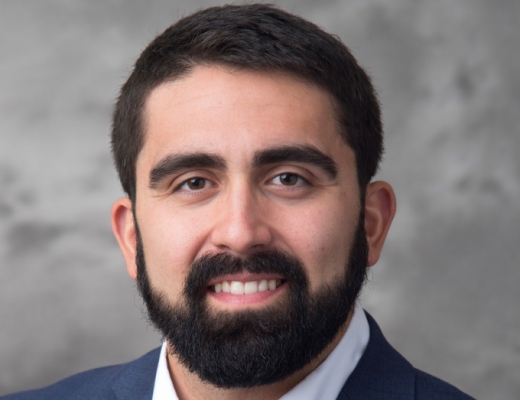
 Dr. Bereket Yilma is a Computer Scientist specializing in optimization and applied Machine Learning. He holds a PhD in Automatic Signal and Image Processing, and Computer Engineering. Currently, he works as a researcher within Computational Interaction (COIN) group at the University of Luxembourg and is a Lecturer in the Department of Computer Science. He also serves as the instructor of Recommender Systems in the Doctoral School of Computer Science and Computer Engineering. His research focuses on various aspects of Human-Centered Artificial Intelligence, including Recommender Systems, Adaptive User Interfaces, and Personalization in the context of Smart Interactive Environments aka Cyber-Physical-Social Systems (CPSS). He also actively contributes to Brain-Computer Interfaces (BCI) research within the framework of the BANANA project, Brainsourcing for Affective Attention Estimation. As an Associate Chair of SIGCHI, Dr. Yilma plays a key role in the HCI community. He is an Instructor at the SIGCHI CIX Summer Schools and serves as a PC member and reviewer for flagship HCI/ML venues, and ACM Conferences, such as CIKM, IUI, SIGIR, AAAI, LOD, ICML, ICLR, and NeurIPS.
October 19, 2023
Safe and versatile human-robot collaboration
Changliu Liu, Assistant Professor, Robotics Institute, School of Computer Science, Carnegie Mellon University
Abstract: Human-robot collaboration (HRC) is one key component to achieving flexible manufacturing to meet the different needs of customers. This talk will cover some of our recent work towards safe and versatile human-robot collaboration in production lines. To ensure safety proactively, we introduced a method to predict how the robot’s behavior would affect the human’s behavior; and then let the robot choose actions either to show courtesy to the human or to influence the human toward system optima. To make the collaboration versatile, we mainly focus on enabling efficient communication between the human and the robot though both novel hardware design and novel algorithmic design. We introduced a low cost textile-based tactile skin which is able to detect gestures by human users. On the algorithmic side, we developed a one-shot learning from demonstration algorithm to efficiently translate human commends and a conditional collaborative handling process to make the robot quickly adapt to the preference of different users. We are developing a human-robot collaborative Lego assembly testbed (with a digital twin), which we hope to integrate all these previous work and then open source and share with the community as a potential benchmark system.
Bio: Dr. Changliu Liu is an assistant professor in the Robotics Institute, School of Computer Science, Carnegie Mellon University (CMU), where she leads the Intelligent Control Lab. Prior to joining CMU, Dr. Liu was a postdoc at Stanford Intelligent Systems Laboratory. She received her Ph.D. in Engineering together with Master degrees in Engineering and Mathematics from University of California at Berkeley and her bachelor degrees in Engineering and Economics from Tsinghua University. Her research interests lie in the design and verification of intelligent systems with applications to manufacturing and transportation. She published the book “Designing robot behavior in human-robot interactions” with CRC Press in 2019; and the book “Algorithms for verifying deep neural networks” in Foundations and Trends in Optimization in 2021. She is the founder of the International Neural Network Verification Competition launched in 2020. In 2022, she demonstrated their human-robot handover system to President Biden. Her work has been covered by IEEE Spectrum, ATI news, Robotiq Blog, etc; and has been recognized by NSF Career Award, Amazon Research Award, Ford URP Award, and many best/outstanding paper awards.
October 11, 2023
The Power of Beauty in Informal Learning
Maria Harrington, Associate Professor of Digital Media, in the Games and Interactive Media Program, Nicholson School of Communication and Media at the University of Central Florida
The Virtual UCF Arboretum is an immersive embodied experience similar to a real field trip used to understand human interconnectedness with nature, emotions, informal learning, beauty, perceptio
n, and shifts in attitudes. Dr. Maria Harrington, Associate Professor of Digital Media at the University of Central Florida, leads research projects focused on methods of modeling and visualizing natural environments and their use in immersive informal learning application design, development, and evaluation. She uses methods of geospatial data visualizations in Unreal Engine to create immersive embodied experiences using augmented and virtual reality. Her research studies investigate informal learning, human emotional and behavioral responses, and impacts on shifts in attitudes. Her research is transforming the way people perceive and understand the natural world.
October 5, 2023
Expanding digital pasts for the future: from data preservation to dynamic collaboration in archaeology
Elizabeth Arkush, Professor of Anthropology, University of Pittsburgh, and Alexander Martin, Associate Director of the Center for Comparative Archaeology
Archaeology is grappling with a deluge of data from field studies, including digitized and born-digital data, geospatial and relational data, and imagery (LiDAR, drone photomosaics, etc). Increasingly, archaeologists aim to synthesize this growing knowledge base from multiple sites and time periods into composite, comparative histories that can speak to contemporary questions: the deep human history of population growth, environment, and sustainable or unsustainable land use; long-term phases of warfare and peace across continents; measuring inequality or prosperity in past societies; and so on. Meanwhile, because archaeological methodologies are often destructive, there is an ethical imperative to preserve the data from our human heritage for the future in robust and long-lasting formats, and make it accessible to diverse users and publics. For over 10 years, the Comparative Archaeology Database at Pitt has served as an open-access, bilingual digital repository for primary archaeological data and full metadata in easy-to-use formats. Here, we envision how to move towards new data architectures for archaeology that are collaborative and dynamic, accommodating the "data deluge" while maintaining responsible preservation.
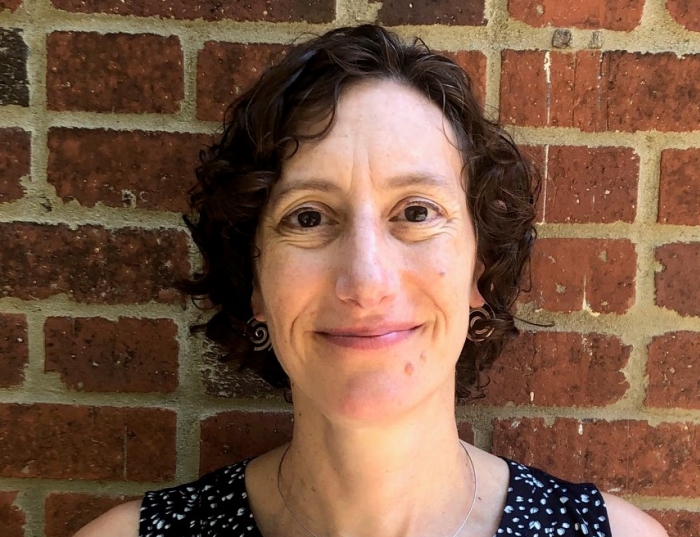 Elizabeth Arkush is Professor of Anthropology at the University of Pittsburgh and Director of the Comparative Center for Archaeology. She is an archaeologist whose field research in the Peruvian Andes has focused on warfare, politics, landscape and climate in late pre-Columbian times. Her research relies on geospatial technologies and digital recording methodologies such as drone mapping, GIS analysis, and satellite image processing. As Director of the CCA, she manages programs to preserve and publish open-access archaeological data and to engage undergraduates in hands-on archaeology research.

SEPTEMBER 21, 2023
Co-sponsored by Pitt Cyber
Why social media is so uniquely toxic to our mental health
Kristina Lerman, Principal Scientist, University of Southern California Information Sciences Institute
There is growing consensus that social media has created a mental health crisis among youth, with severe consequences to their emotional well-being, social functioning, and physical health. This crisis disproportionately affects girls and young women, widening gender gaps and hindering progress towards gender equality. However, the pathways of social media harm are not well understood. In this talk I present evidence for a potential mechanism, exploring it in the context of eating disorders, an often-fatal mental health condition that includes anorexia, bulimia and binge eating disorder. The rise in eating disorders has been linked to the proliferation of idealized body images on social media; however, the link between social media and eating disorders is more complex. I show how technological affordances of social media can create a “harm spiral” that traps people in toxic echo chambers that promote eating disorders. Specifically, social media makes harmful content easy to discover and its group dynamics encourage people to stay engaged, which exposes them to more harmful content that is deleterious to mental health. To address the youth mental health crisis, we urgently need to understand how social media harms mental health, and who is vulnerable to its detrimental effects.
 Kristina Lerman is a Principal Scientist at the University of Southern California Information Sciences Institute and holds a joint appointment as a Research Professor in the USC Computer Science Department. Trained as a physicist, she now applies network analysis and machine learning to problems in computational social science, including crowdsourcing, social network and social media analysis. Her work on modeling and understanding cognitive biases in social networks has been covered by the Washington Post, Wall Street Journal, and MIT Tech Review. She is a fellow of the AAAI.